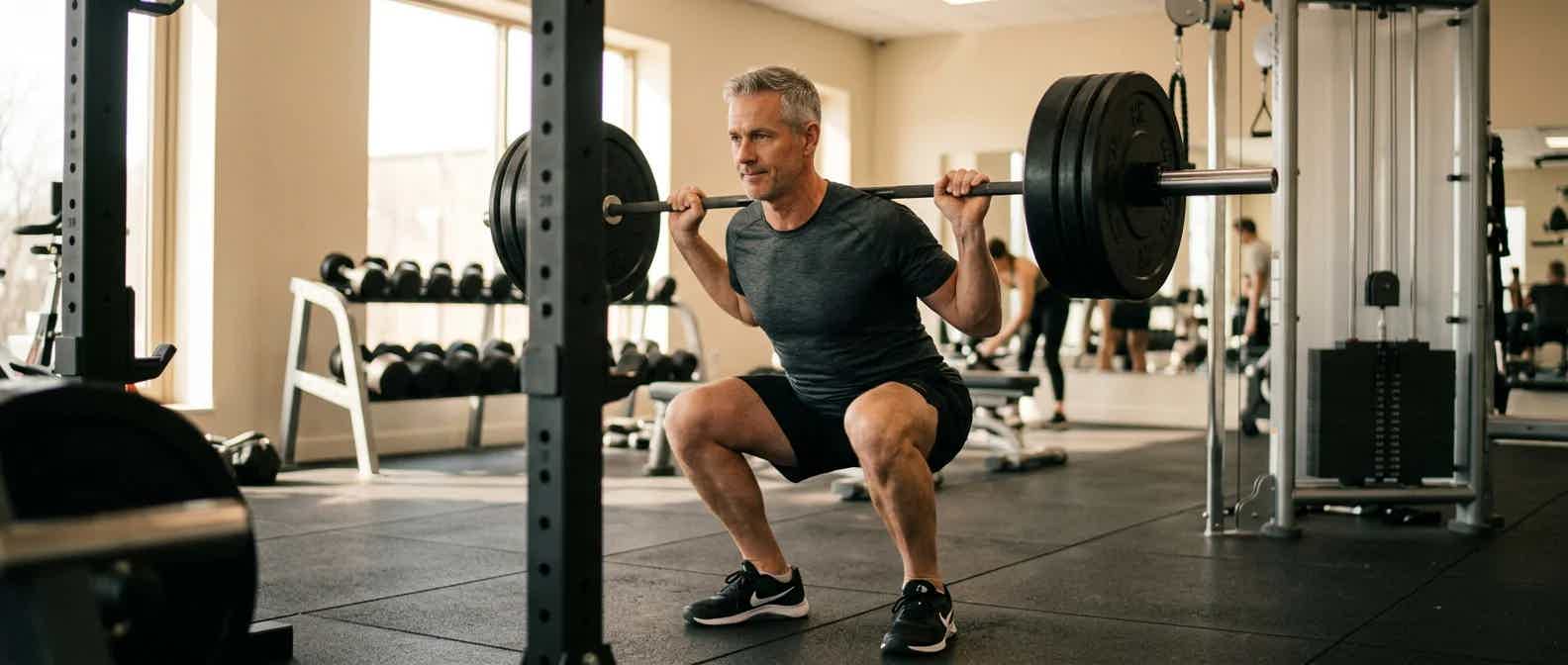
Most fitness advice on the internet was written for 25-year-olds. That doesn't make it wrong — it makes it irrelevant for most of the people reading it.
If you're past 40 and you've followed the standard playbook (lift heavy, run hard, recover with a protein shake), you've probably noticed two things. First, the results don't show up the way they used to. Second, you get hurt more often, and you stay hurt longer. Neither of those is a willpower problem. They're a biology problem the standard advice doesn't acknowledge.
The two things that actually change
After about 35, two systems quietly downshift: tendon remodeling slows, and the inflammatory response after exercise stays elevated longer. Translation: your soft tissue takes longer to adapt to load, and your recovery window gets wider, not narrower. The 25-year-old's body absorbs three hard sessions a week and asks for more. Your body absorbs two and needs the third day to be genuinely easy.
The standard advice ignores this because the loudest voices in fitness content are 28 years old.
Train like you're 25 and your body sends you the bill at 50.
What works instead
Nothing exotic. The principles that hold up after 40 are unflashy and boring on purpose:
Two hard sessions per week, three to four total — not five hard, not seven moderate
Strength work twice a week, even if cardio is your goal
Sleep treated as a training input, not a luxury
Protein at every meal, not just post-workout
A long warm-up before anything hard — eight minutes, not eighty seconds
None of this is going to go viral. None of it requires a gadget. None of it makes a good before-and-after photo. It's also the only reason the people you know who are still active at 60 are still active at 60.
The goal at this stage isn't to optimize. It's to keep showing up for another 20 years.
Stop training like a 25-year-old. You're not a 25-year-old.